
- Chinese
- French
- German
- Portuguese
- Spanish
- Russian
- Japanese
- Korean
- Arabic
- Irish
- Greek
- Turkish
- Italian
- Danish
- Romanian
- Indonesian
- Czech
- Afrikaans
- Swedish
- Polish
- Basque
- Catalan
- Esperanto
- Hindi
- Lao
- Albanian
- Amharic
- Armenian
- Azerbaijani
- Belarusian
- Bengali
- Bosnian
- Bulgarian
- Cebuano
- Chichewa
- Corsican
- Croatian
- Dutch
- Estonian
- Filipino
- Finnish
- Frisian
- Galician
- Georgian
- Gujarati
- Haitian
- Hausa
- Hawaiian
- Hebrew
- Hmong
- Hungarian
- Icelandic
- Igbo
- Javanese
- Kannada
- Kazakh
- Khmer
- Kurdish
- Kyrgyz
- Latin
- Latvian
- Lithuanian
- Luxembou..
- Macedonian
- Malagasy
- Malay
- Malayalam
- Maltese
- Maori
- Marathi
- Mongolian
- Burmese
- Nepali
- Norwegian
- Pashto
- Persian
- Punjabi
- Serbian
- Sesotho
- Sinhala
- Slovak
- Slovenian
- Somali
- Samoan
- Scots Gaelic
- Shona
- Sindhi
- Sundanese
- Swahili
- Tajik
- Tamil
- Telugu
- Thai
- Ukrainian
- Urdu
- Uzbek
- Vietnamese
- Welsh
- Xhosa
- Yiddish
- Yoruba
- Zulu
- Kinyarwanda
- Tatar
- Oriya
- Turkmen
- Uyghur






komatsu pc1250 engine
When you hear 'Komatsu PC1250 engine', most guys immediately think of the SAA6D140E. That's correct, but it's also where the first mistake happens. It's not just a model number you order; it's an assembly of systems that live in a brutal environment. I've seen too many projects stall because someone treated it like a simple drop-in unit, ignoring the interplay between the hydraulic pump drive, the ECM calibration for the specific machine serial number range, and the cooling package that was never quite the same after the 2008 emissions update. The real story starts after you unbox it.
The Heart Isn't Always the Problem
We had a unit down in West Africa, a PC1250-8 throwing constant derate codes. Everyone was screaming for a new engine. Fly in a complete SAA6D140E? That's a $80k+ decision before you even touch the labor. Before pulling the trigger, we insisted on a data log. The fuel pressure was dancing, but not where you'd expect. It wasn't at the primary filter or the pump. The tech found a nearly invisible hairline crack in the Komatsu PC1250 engine fuel rail, one of those cast pieces you never think about. A $500 part, not a $80k engine. The lesson? The engine's health is defined by its peripherals as much as its internals.
This is where a good supplier shows its value. It's not about having a warehouse full of engines; it's about having the technical depth to diagnose before you replace. A company like Jining Gaosong Construction Machinery Co., Ltd. operates in that space. Being an OEM product supplier within Komatsu's system means they get the genuine parts flow, but their real role as a third-party solver is to cut through the noise. They've seen the patterns—like how the turbocharger wastegate actuators on certain -8 models fail in high-dust environments, mimicking more serious internal failures.
I remember a conversation with their field guy about the aftercooler cores. He didn't just sell me one; he pointed out the specific bolt torque sequence for the intake manifold adapter. Overtorque it, and you warp the seating surface, leading to a boost leak you'll chase for weeks. That's the kind of practical, gritty detail you only get from hands-on, repeated exposure to these machines. It's not in the shop manual.
Genuine vs. Compatible: A Cost-Benefit Minefield
The debate never ends. For the PC1250's engine, my rule is simple: critical moving parts and electronics, always genuine. That means injectors, the HPCR pump, the ECM, sensors. The risk of a $300 compatible injector failing and washing fuel into the oil, taking out the entire bottom end, is a financial catastrophe. I've been burned trying to save $10k on a set of injectors, only to lose a crankshaft six months later.
But for static or non-critical components? That's where a smart third-party partner is gold. Things like the engine mounting blocks, certain gasket sets, the front pulley, or even the fan hub assembly. A supplier like Gaosong, which they list on their site takematsumachinery.com as helping solve parts supply challenges, understands this balance. They can provide the genuine Komatsu seal for the rear crankshaft, but might also have a rigorously tested alternative for the aluminum thermostat housing that's half the price and just as good, because the OEM one is notoriously prone to corrosion.
The key is transparency. A good supplier will tell you, This is a risk item, go genuine. This one, we've tested on five units with no issue. Their business model relies on being that trusted advisor, not just a parts cannon. For the Komatsu PC1250 engine, the oil cooler lines are a perfect example. The OEM ones are excellent, but after 12,000 hours, any line is due for replacement. A high-quality compatible line with proper SAE 100R2 certification can be a safe, massive cost saving, keeping the machine earning while you wait for a more critical genuine part to arrive.
The Serial Number is Your Bible
This might sound basic, but it's the single biggest point of failure in parts ordering. The PC1250-7 and the early -8 models used a different ECM software map than the later -8s. If you just order an ECM for a PC1250-8, you have a 50/50 chance of getting a paperweight that won't communicate with the monitor panel. The engine serial number, and often the machine frame number, are non-negotiable.
We learned this the hard way on a mining site in Chile. We had an ECM failure. We quoted the engine model: SAA6D140E. The part arrived, was installed, and the machine wouldn't get out of low-idle mode. Three weeks of downtime later, tracing through Komatsu's technical bulletins, we found the revision change. The supplier, in this case, didn't ask for the serial. We assumed they knew. Now, our first question to any supplier, like when we engage with Gaosong, is to confirm they require the full serial chain before quoting. Their description as an OEM-system supplier suggests they have access to those detailed build records, which is critical.
It extends to physical parts too. The turbocharger assembly for the Komatsu PC1250 engine had a subtle change in the compressor wheel material around 2012 to better handle sustained high temps. The part numbers cross-reference, but the performance under load in a hard-rock quarry is different. You need a supplier who digs that layer deeper.
Cooling System: The Silent Killer
Nobody gets excited about radiators and intercoolers until they're the reason for a shutdown. The PC1250's engine cooling package is a masterpiece of tight packaging, which is its downfall. Debris builds up between the hydraulic oil cooler and the radiator core, reducing airflow. The engine runs hot, the ECM pulls power. Operators complain of lack of power, and again, the knee-jerk reaction is to blame the engine internals.
The fix is often infuriatingly simple: a proper clean-out. Not just a water hose from the front, but pulling the side shrouds and blowing from the engine side out. But the design leads to other issues. The plastic end tanks on the radiator can develop stress cracks. The OEM solution is a whole new radiator. A practical alternative we've used, sourced through channels that solve supply issues, is having the end tanks professionally replaced with aluminum units. It's a workshop job, but it costs a fraction and is more durable. It's this kind of adaptive, on-the-ground solution that defines real equipment management.
Then there's the fan clutch. A failing viscous fan clutch on the Komatsu PC1250 engine won't always scream. It'll just slowly let temps creep up. Replacing it is a beast of a job, requiring the removal of the fan shroud and a huge amount of disassembly. The trick is to monitor the temperature delta between the top and bottom of the radiator over time. A narrowing delta is an early warning. This is the kind of operational data you never get from a spec sheet, only from living with the machine.
Beyond the Engine Bay: The Hydraulic Symbiosis
You can't talk about this engine in isolation. Its sole job is to drive hydraulic pumps. A failing pump, with increased internal leakage and therefore higher load, will make a perfectly healthy engine seem sluggish and fuel-thirsty. I've seen a pump issue cause such a constant high load that it accelerated wear on the engine's valve train. The diagnostics pointed to low compression, but the root cause was two bays over in the hydraulic system.
This is where having a partner who understands the whole machine pays off. A supplier focused only on engines might sell you a top-end overhaul kit. A supplier embedded in the Komatsu ecosystem, whose job is to solve operational challenges, might first ask for the main pump pressure and flow test results. Their perspective is keeping the machine running, not just moving parts. As noted in their intro, helping solve parts supply challenges often means helping diagnose the right part to solve the actual problem.
For instance, if you're seeing black smoke only when swinging under load, is it an engine injector issue or is the swing pump pressure relief valve sticking, creating a sudden massive load spike? The fix for the former is in the engine bay. The fix for the latter is in the hydraulic tank. Knowing the difference saves tens of thousands. The Komatsu PC1250 engine is a marvel of power, but it's a team player. You have to manage the whole team.
Related Products
Related Products

Best Selling Products
Best Selling Products-
 7861-93-2330 SENSOR,REVOLTION–Komatsu Original Factory
 -
 Hd785-5 Retarder 561-35-62203 For Dump Truck Original Parts, High…
 -
 Original Stock Engine Parts Core 6212-61-6121 Is Suitable for Komatsu SA6D140-1 Engine – Image 2 Original Stock Engine Parts Core 6212-61-6121 Is Suitable for Komatsu SA6D140-1 Engine – Image 3 Original Stock Engine Parts Core 6212-61-6121 Is Suitable for Komatsu SA6D140-1 Engine – Image 4 Original Stock Engine Parts Core 6212-61-6121 Is Suitable for Komatsu SA6D140-1 Engine – Image 5 Original Stock Engine Parts Core 6212-61-6121 Is Suitable for Komatsu SA6D140-1 Engine – Image 6 Original Stock Engine Parts Core 6212-61-6121 Is Suitable for Komatsu SA6D140-1 Engine
 -
 HD785-7 center exhaust manifold 6215-11-5172
 -
 702-16-02290 Original Lever Assy for Bulldozer D275A-5r D65ex-16 D65px D155ax-6 in Stock
 -
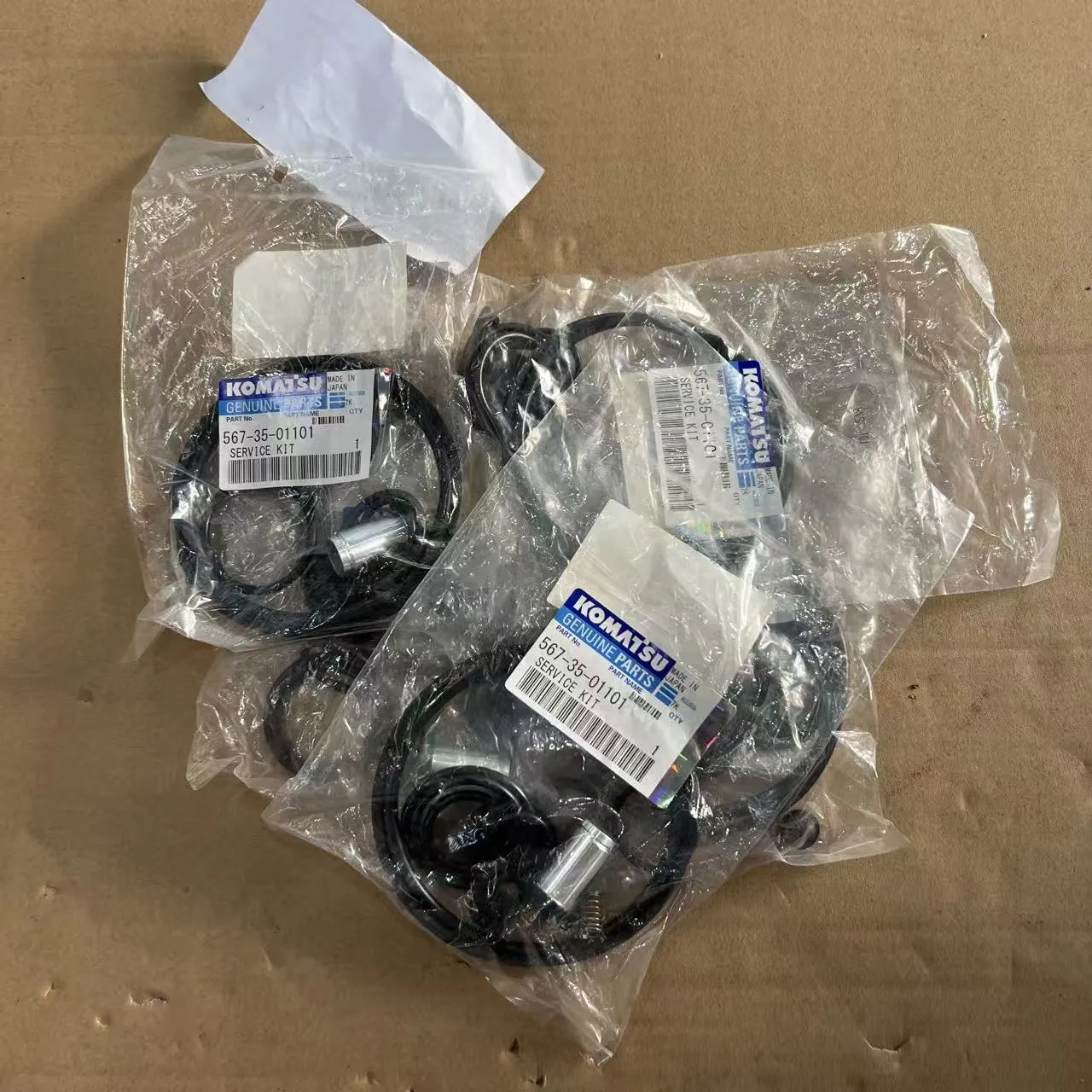 Komatsu 567-35-01101 Service Kit
 -
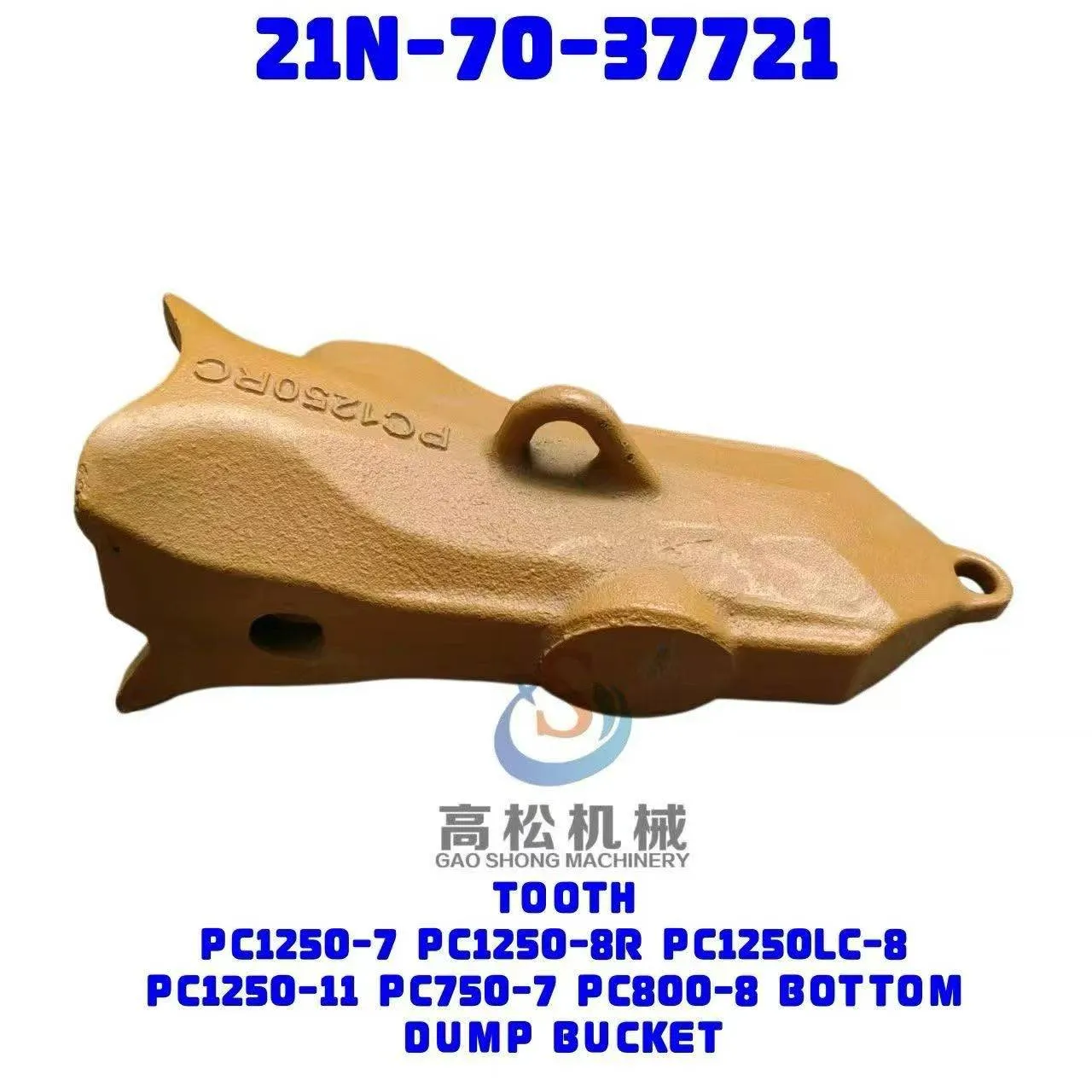 21n-70-37721 Bucket teeth, suitable for the following vehicle models. PC1250-7 PC1250-8R PC1250LC-8 PC1250-11 PC750-7 PC800-8 BOTTOM TOOTH PC1250-7 PC1250-8R PC1250LC-8 PC1250-11 PC750-7 PC800-8 BOTTOM DUMP BUCKET
 -
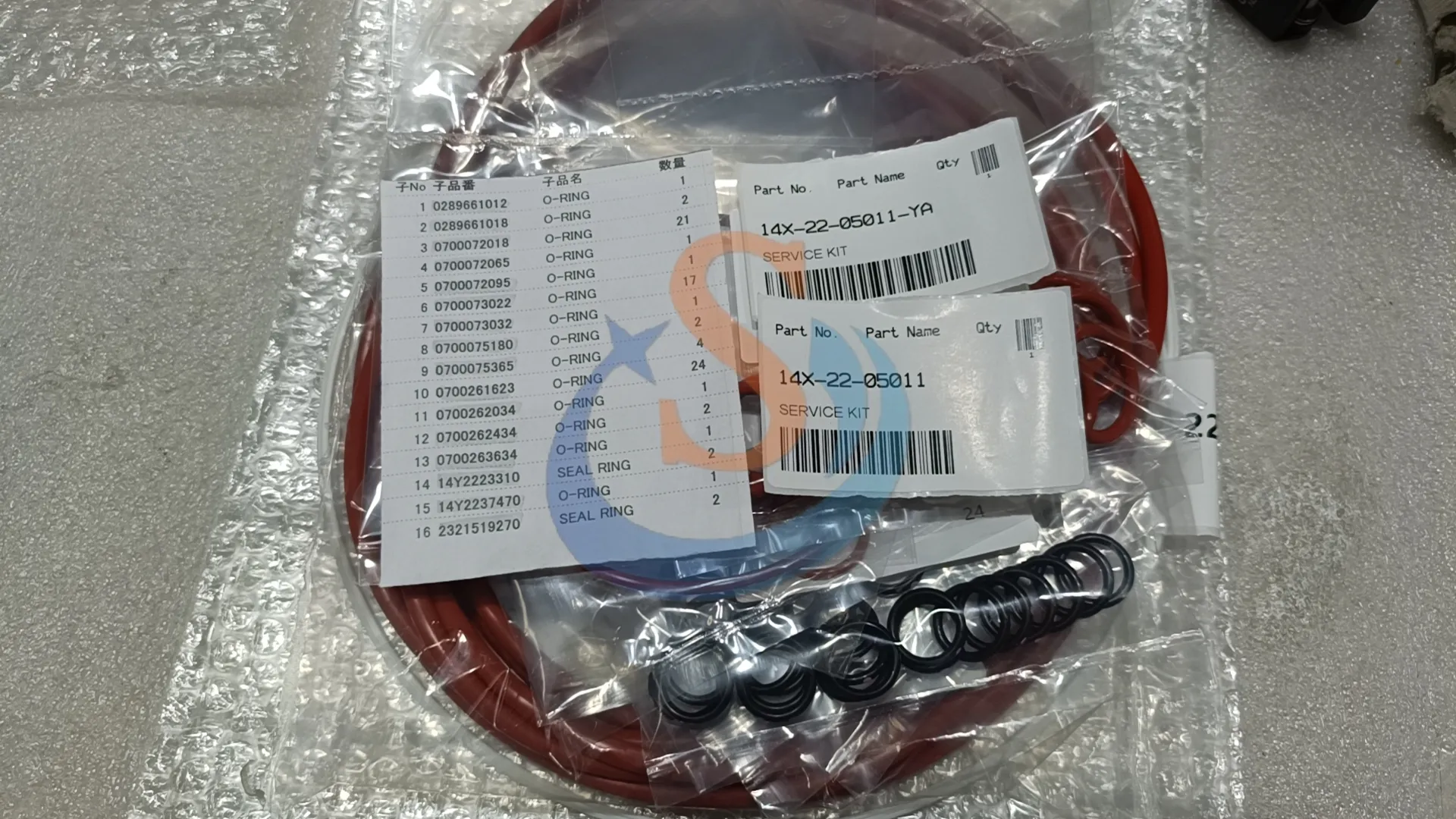 14X-22-05011,SERVICE KIT,D65PX,D65EX,D65WX
 -
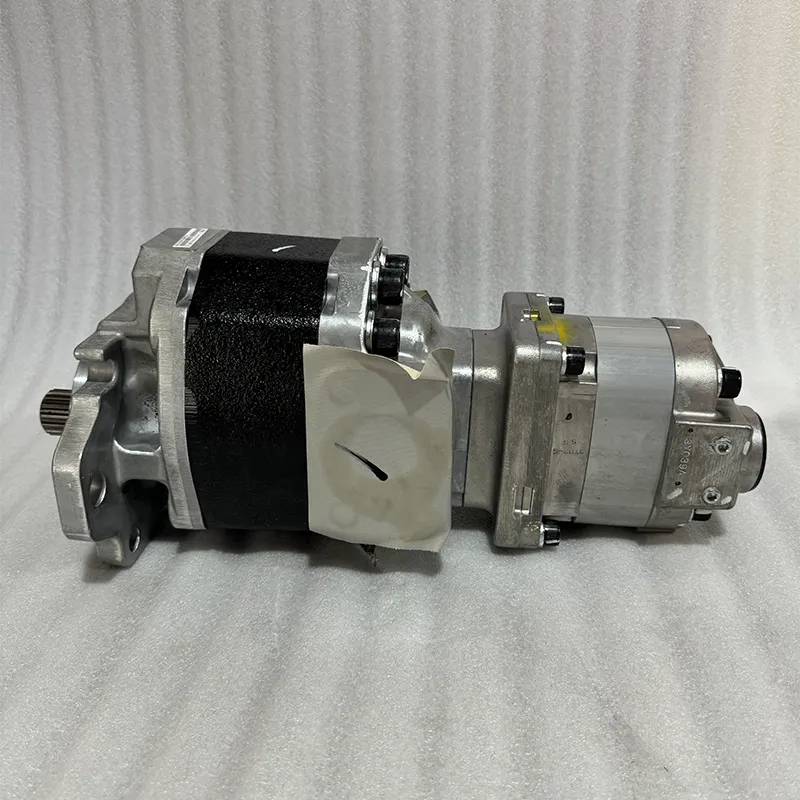 Original komatsu HD605-7R Gear Pump 705-95-05140
 -
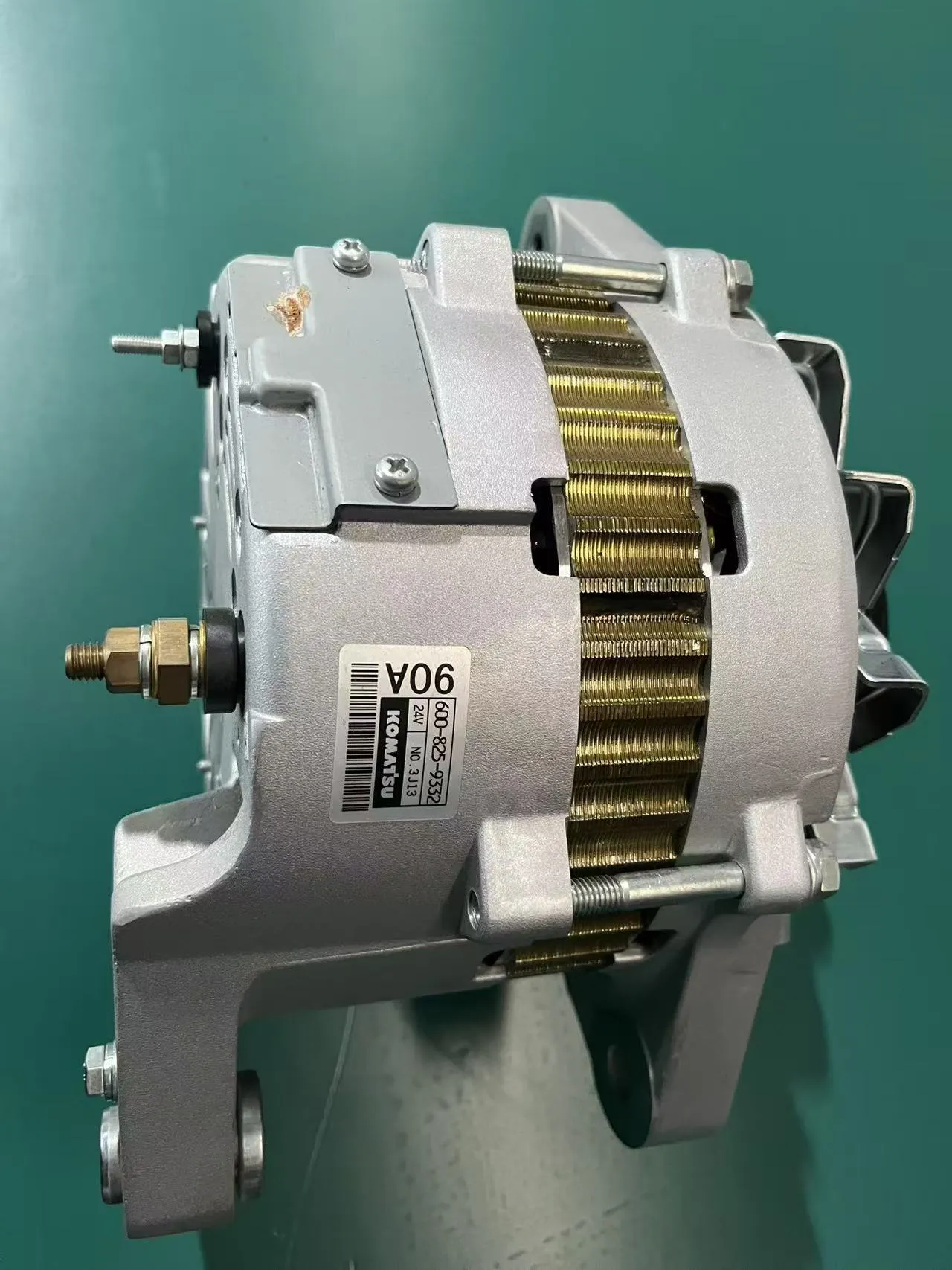 600-825-9332 alternator Generator
 -
 561-03-81550 High Quality Parts For Komatsu Hd465/hd785, High…
 -
 Komatsu WA380-1LC 421-06-13401 LIGHT… — Supply.Parts