
- Chinese
- French
- German
- Portuguese
- Spanish
- Russian
- Japanese
- Korean
- Arabic
- Irish
- Greek
- Turkish
- Italian
- Danish
- Romanian
- Indonesian
- Czech
- Afrikaans
- Swedish
- Polish
- Basque
- Catalan
- Esperanto
- Hindi
- Lao
- Albanian
- Amharic
- Armenian
- Azerbaijani
- Belarusian
- Bengali
- Bosnian
- Bulgarian
- Cebuano
- Chichewa
- Corsican
- Croatian
- Dutch
- Estonian
- Filipino
- Finnish
- Frisian
- Galician
- Georgian
- Gujarati
- Haitian
- Hausa
- Hawaiian
- Hebrew
- Hmong
- Hungarian
- Icelandic
- Igbo
- Javanese
- Kannada
- Kazakh
- Khmer
- Kurdish
- Kyrgyz
- Latin
- Latvian
- Lithuanian
- Luxembou..
- Macedonian
- Malagasy
- Malay
- Malayalam
- Maltese
- Maori
- Marathi
- Mongolian
- Burmese
- Nepali
- Norwegian
- Pashto
- Persian
- Punjabi
- Serbian
- Sesotho
- Sinhala
- Slovak
- Slovenian
- Somali
- Samoan
- Scots Gaelic
- Shona
- Sindhi
- Sundanese
- Swahili
- Tajik
- Tamil
- Telugu
- Thai
- Ukrainian
- Urdu
- Uzbek
- Vietnamese
- Welsh
- Xhosa
- Yiddish
- Yoruba
- Zulu
- Kinyarwanda
- Tatar
- Oriya
- Turkmen
- Uyghur






Komatsu fuel injection pump
You see a lot of chatter online about the Komatsu fuel injection pump, often fixated on part numbers and pressure specs. That's fine, but it misses the point. The real story isn't in the catalog; it's in the field, where a 1% deviation in timing or a worn seal you didn't think to check can turn a PC300-8 into a fuel-guzzling, low-power headache. Many assume these pumps are sealed units—replace, don't repair. That's a costly misconception, especially in markets where genuine parts are a logistics nightmare. I've seen operations wait six months for a complete pump assembly when a qualified rebuild of the existing unit was possible in days. That's where the practical knowledge, and companies that bridge that gap, become critical.
The Core Misunderstanding: Black Box vs. Serviceable Component
There's this pervasive idea that Komatsu's common rail systems, particularly the pumps on the SAA6D114E or S6D engines, are these impenetrable black boxes. The official stance often leans toward unit exchange for a reason—it guarantees performance and simplifies warranty. But declaring them unserviceable is different. The Komatsu fuel injection pump is a precision piece, yes, but its subcomponents—the cam plate, the plungers, the delivery valves—can be inspected and, if within tolerances, reused. The trick is knowing which wear is acceptable and which is a death sentence.
I recall a D65EX-12 that was down with low power. The dealer's diagnosis pointed straight to the pump. The quote for a new assembly was astronomical. We pulled it and sent it to a specialist—not a generic diesel shop, but one familiar with Komatsu's specific tolerances. They found the issue: a slightly scored cam plate and a weak regulator valve spring. The plungers and barrel were fine. A partial rebuild got that dozer back to work at a third of the cost. The lesson? Don't write off the pump on the first pressure test failure. The fuel injection pump failure is often a symptom, not the root cause—a clogged final filter upstream can send abrasive particles through that will wreck a new pump just as fast.
This is precisely the niche where a supplier with OEM background but third-party flexibility is invaluable. A company like Jining Gaosong, which operates as an OEM supplier within Komatsu's system but also independently, understands this duality. They've seen the official parts flow and the on-ground realities in regions with supply chain gaps. Their perspective at takematsumachinery.com isn't just about moving boxes; it's about solving the actual problem, which sometimes means advising on a rebuild kit or a compatible, quality-tested subcomponent rather than pushing the most expensive full assembly.
Practical Failures and the Diagnostics Trap
Let's talk about real failures. The most common isn't a sudden, catastrophic pump seizure. It's a gradual loss of engine power and increased fuel consumption. The machine's monitoring system might throw a generic low rail pressure code. Immediately, everyone blames the Komatsu fuel injection pump. But jump straight to replacement and you might be wasting money.
On a PC200-8, we had persistent code. Replaced the fuel filters, checked lines—no good. Pressure was low at the rail. The instinct was the pump. Before pulling it, we did a simple test: monitored the pump's supply side. The lift pump from the tank was delivering volume but pressure was fluctuating due to a slightly cracked hose fitting sucking air. The high-pressure pump was cavitating. Fixed the suction side leak, and the failing pump performed perfectly. The diagnostic trap is real. The pump is the heart of the high-pressure system, so it gets the blame when anything upstream or downstream falters.
Another subtle one is fuel quality. In many emerging markets, fuel spec is a suggestion. Poor lubricity in ultra-low sulfur diesel without proper additives will kill the plungers in a Komatsu fuel injection pump faster than anything. I've torn down pumps where the plungers looked sandblasted. The operator swears they use good fuel, but there's no history of additive use. This is a silent killer that no amount of pump quality can fully defend against, and it's a critical point of education that any serious parts supplier should emphasize.
When Rebuild Makes Sense, and When It Doesn't
So when do you actually rebuild? It's a judgment call. If the pump housing is cracked or the camshaft bearing journals are deeply scored, it's scrap. But if the damage is confined to wear parts, a rebuild is viable. The catch is the calibration. You can't just slap in new plungers and bolt it on. The pump needs to be tested on a bench to ensure its delivery curve matches the engine's ECU map. This is where you need a partner with the right equipment and data. A supplier with OEM lineage, like the team behind Jining Gaosong Construction Machinery Co., Ltd., typically has access to the technical data and understands the calibration specs that a generic rebuilder might not. They're not just selling a part; they're often facilitating the correct service solution.
I've also seen attempts to mix and match components from different pump series. Maybe the physical fit seems okay, but the internal port timing or plunger diameter is off by a millimeter. The engine might run, but poorly, with weird harmonics and reduced lifespan. The specificity matters. Komatsu doesn't design these systems with universal interchangeability, and for good reason.
The Supply Chain Reality and the Third-Party Role
This brings us to the messy reality of parts supply. For a mine in a remote location or a contractor in a country with import restrictions, waiting for a genuine pump through official channels can mean weeks of downtime. This is the parts supply challenges that companies like Jining Gaosong mention. Their role as a third-party sales company for Komatsu isn't about undercutting the dealer network; it's about providing an alternative conduit for genuine or OEM-equivalent parts where the standard pipeline is clogged or non-existent.
They can often source that specific fuel injection pump assembly or, more importantly, the repair kit for it, faster because their operational model is built for these logistical hurdles. It's a pragmatic solution. You're not buying a mystery part; you're buying a part with traceable provenance, often from the same OEM factories that supply Komatsu, but routed through a more flexible distribution channel. Checking their site, takematsumachinery.com, you get a sense of this—it's focused on solving the availability problem for critical components.
I worked on a fleet of HD785 trucks where we needed a pump for a S6D140 engine. The local dealer's lead time was 90 days. Through a similar specialized supplier, we had a fully remanufactured and calibrated unit in 12 days. The downtime savings were enormous. The key was the supplier's understanding that this wasn't just a sales transaction but a critical path item for the operation.
Final Thoughts: Knowledge as the Ultimate Tool
At the end of the day, dealing with a Komatsu fuel injection pump effectively comes down to knowledge and access. Knowledge to diagnose correctly, to know when to repair versus replace, and to understand the system interactions. Access to the right parts or solutions through a reliable supply chain when you need them.
The industry is moving toward more modular, throw-away component design, but in the real world of cost-sensitive and downtime-sensitive operations, that's not always practical or economical. There will always be a need for deep technical understanding and suppliers who operate in that gray area between pure OEM and the aftermarket, providing solutions that are both technically sound and logistically feasible.
So, next time a low rail pressure code flashes, don't just order a pump. Check the suction side. Verify fuel quality. Consider a qualified rebuild. And know who to call when the standard channels aren't enough. That's how you keep machines running and costs in check. The pump is just one piece of the puzzle, but understanding it properly is what separates a parts changer from a real technician.
Related Products
Related Products

Best Selling Products
Best Selling Products-
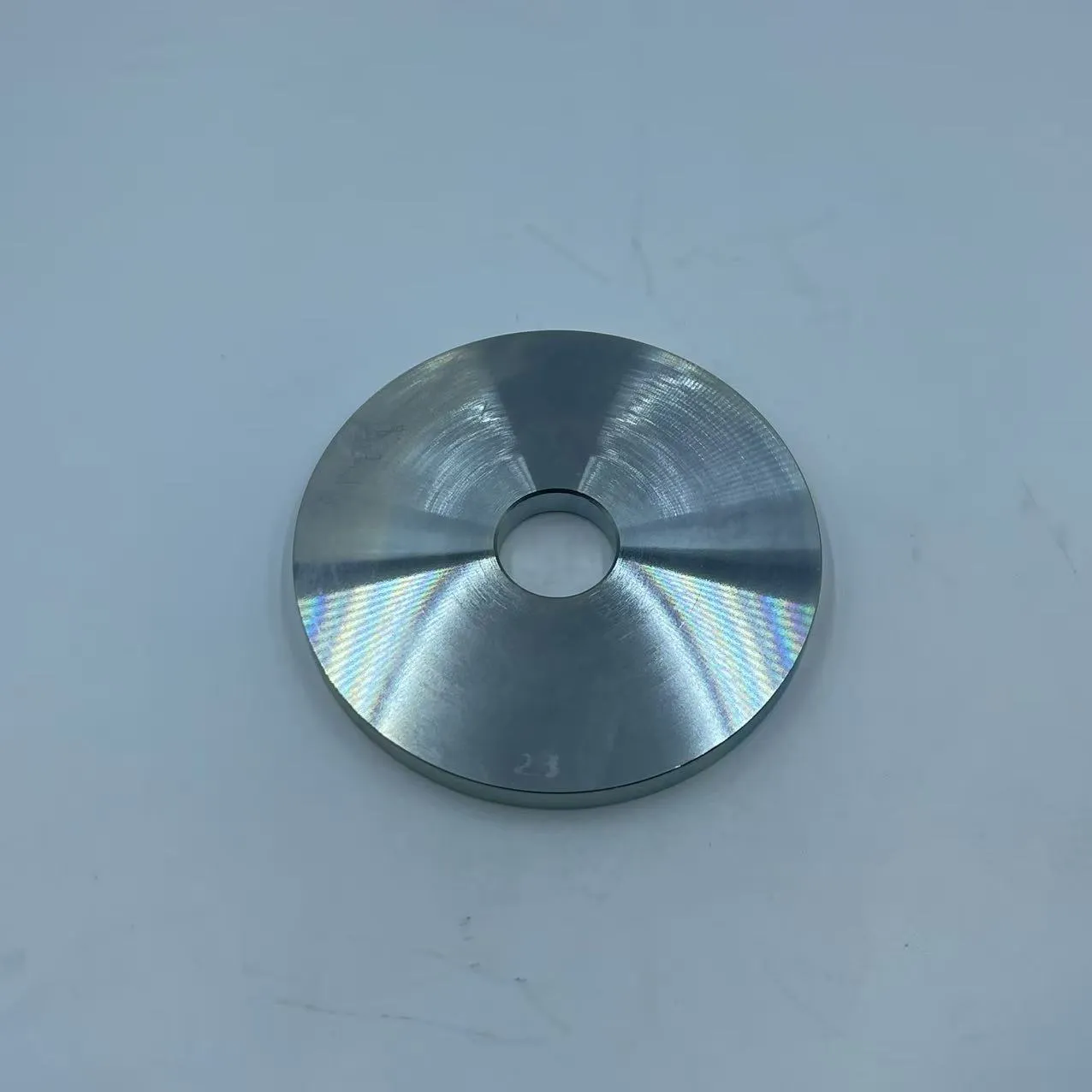 PLATE – 195-04-42170
 -
 Relief Valve 708-2H-03411
 -
 Original Hot Sale TENSION PULLEY ASS’Y 6240-61-4500 TENSION…
 -
 20Y-60-31450 Komatsu Valve Assembly
 -
 Valve 104-15-25480 – KOMATSU
 -
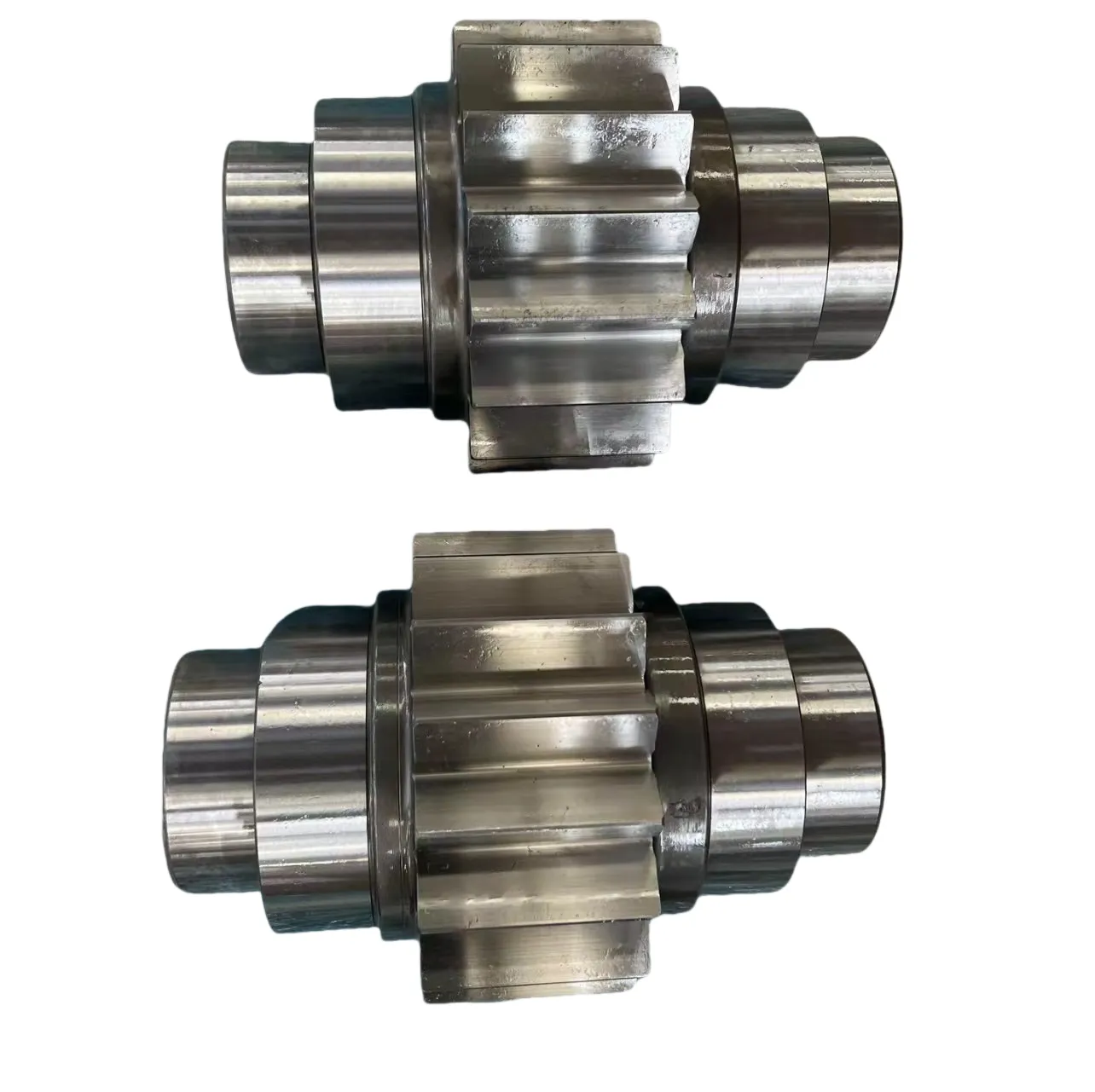 D475A-5 Final Drive Gear 198-27-45163
 -
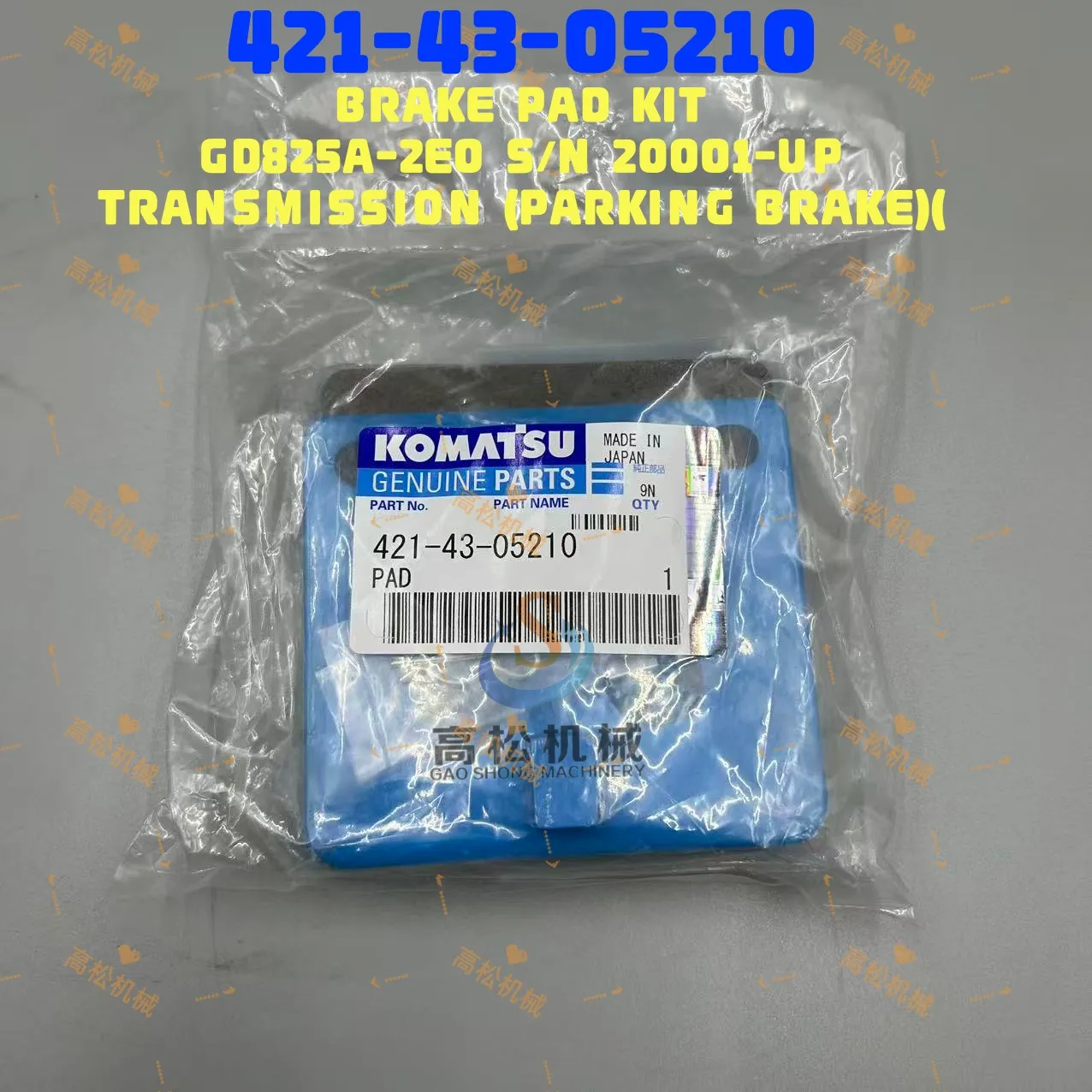 421-43-05210Brake pad kit 421-43-05210 for Komatsu GD825A-2 GD825A-2E0
 -
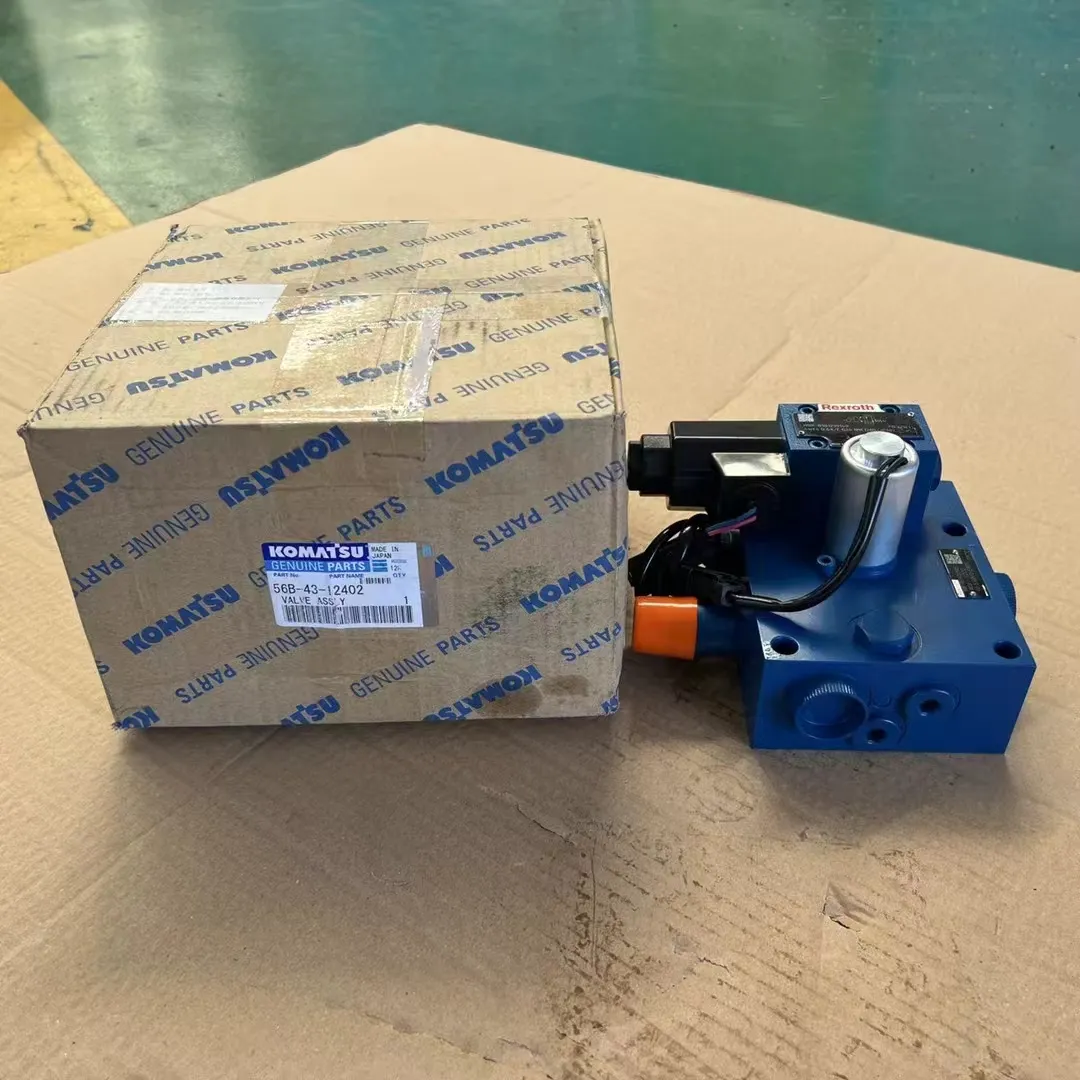 Supply Komatsu HD465-7EPC dump truck valve 56B-43-12402
 -
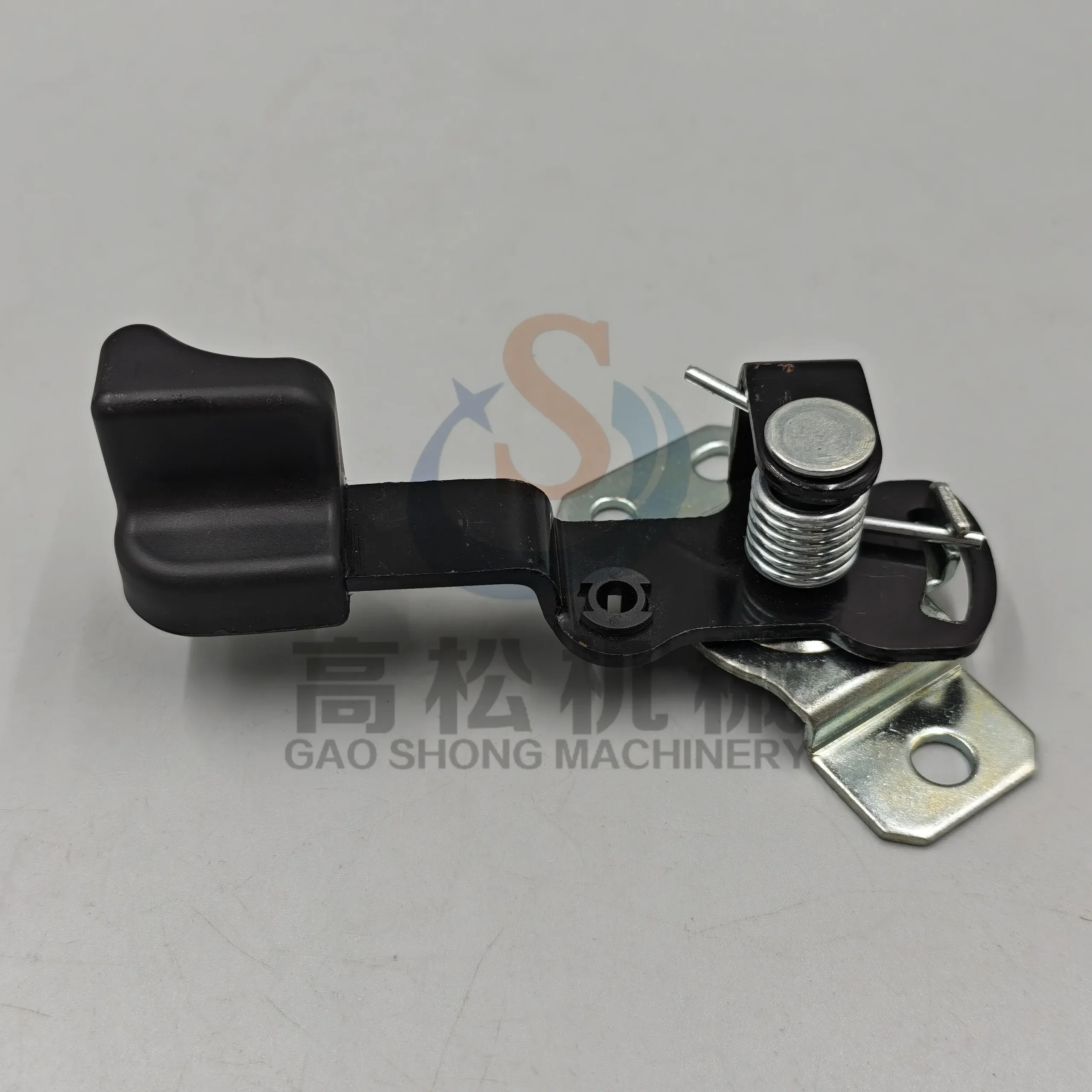 20Y-54-52300 Komatsu Handle Assembly
 -
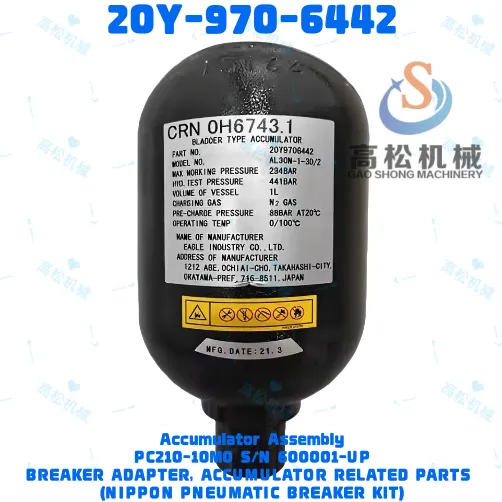 20Y-970-6442 Accumulator Assembly PC210-10M0 BREAKER ADAPTER, ACCUMULATOR RELATED PARTS (NIPPON PNEUMATIC BREAKER KIT) PC500LC-10M0 PC500LC-10R
 -
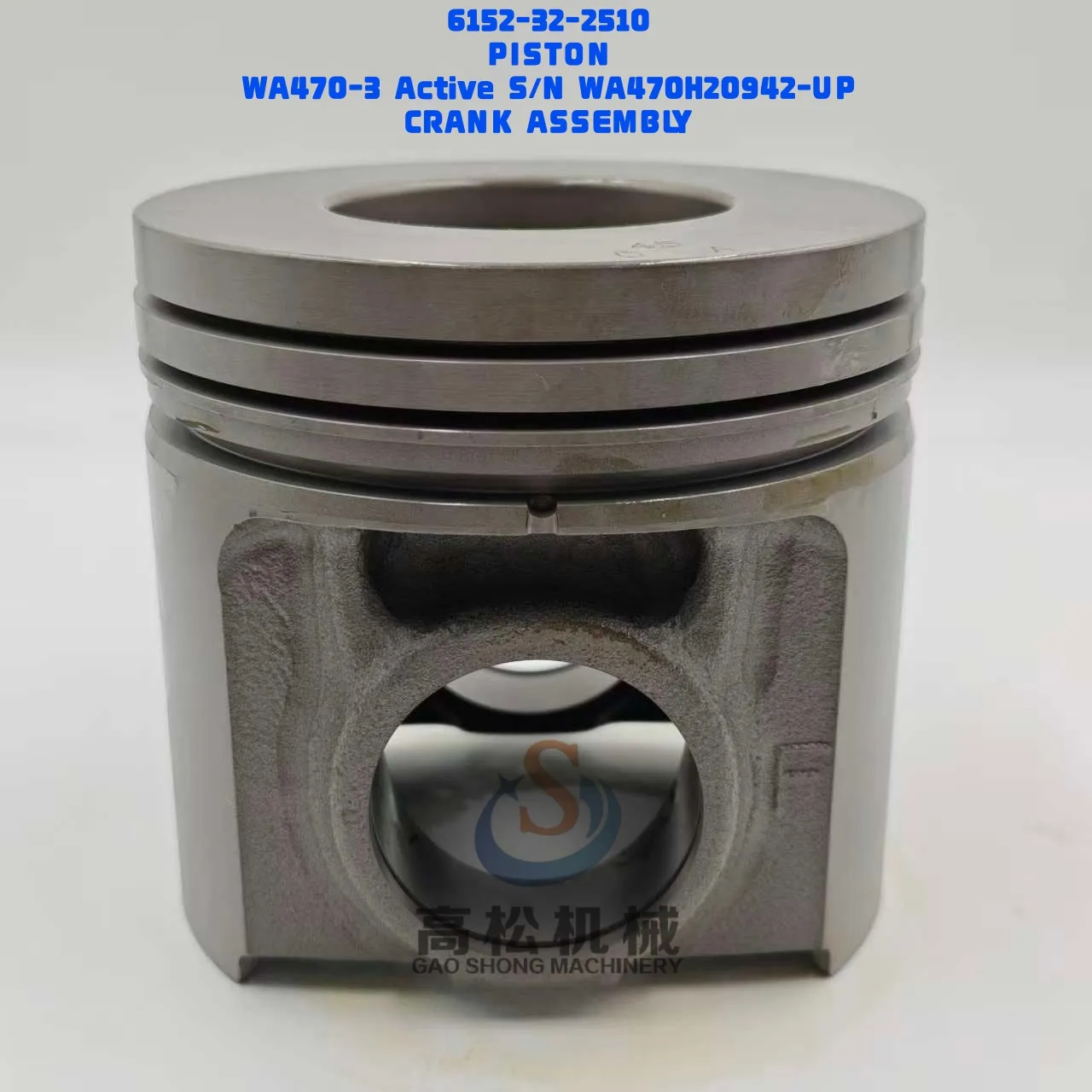 6152-32-2510 PISTON KOMATSU parts D87E, D87P, DCA, EGS360,380, PC400, PW400MH, S6D125E, SA6D125E, SAA6D125E, WA450, WA470, WA480
 -
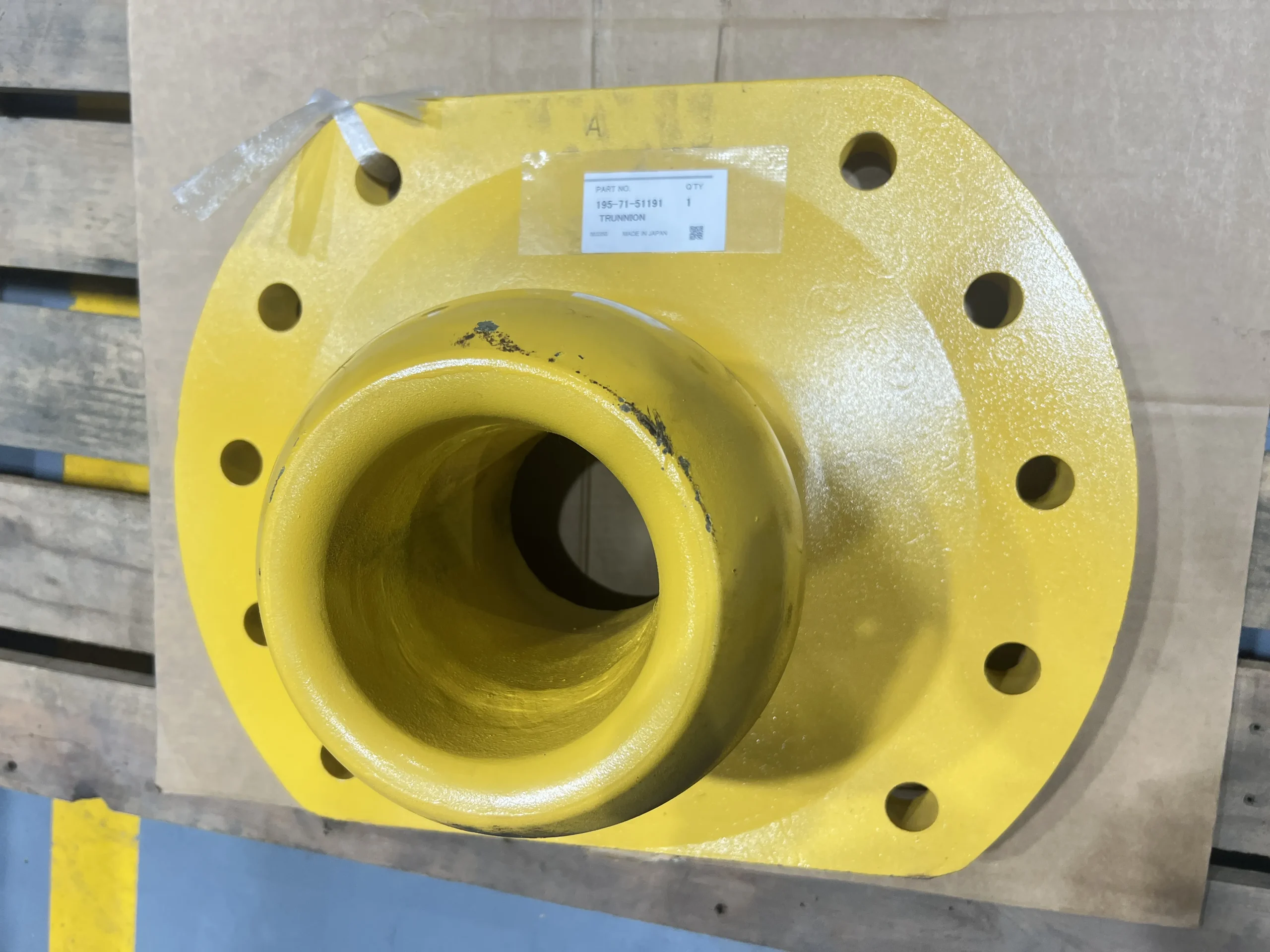 TRUNNION 195-71-51191 – KOMATSU